
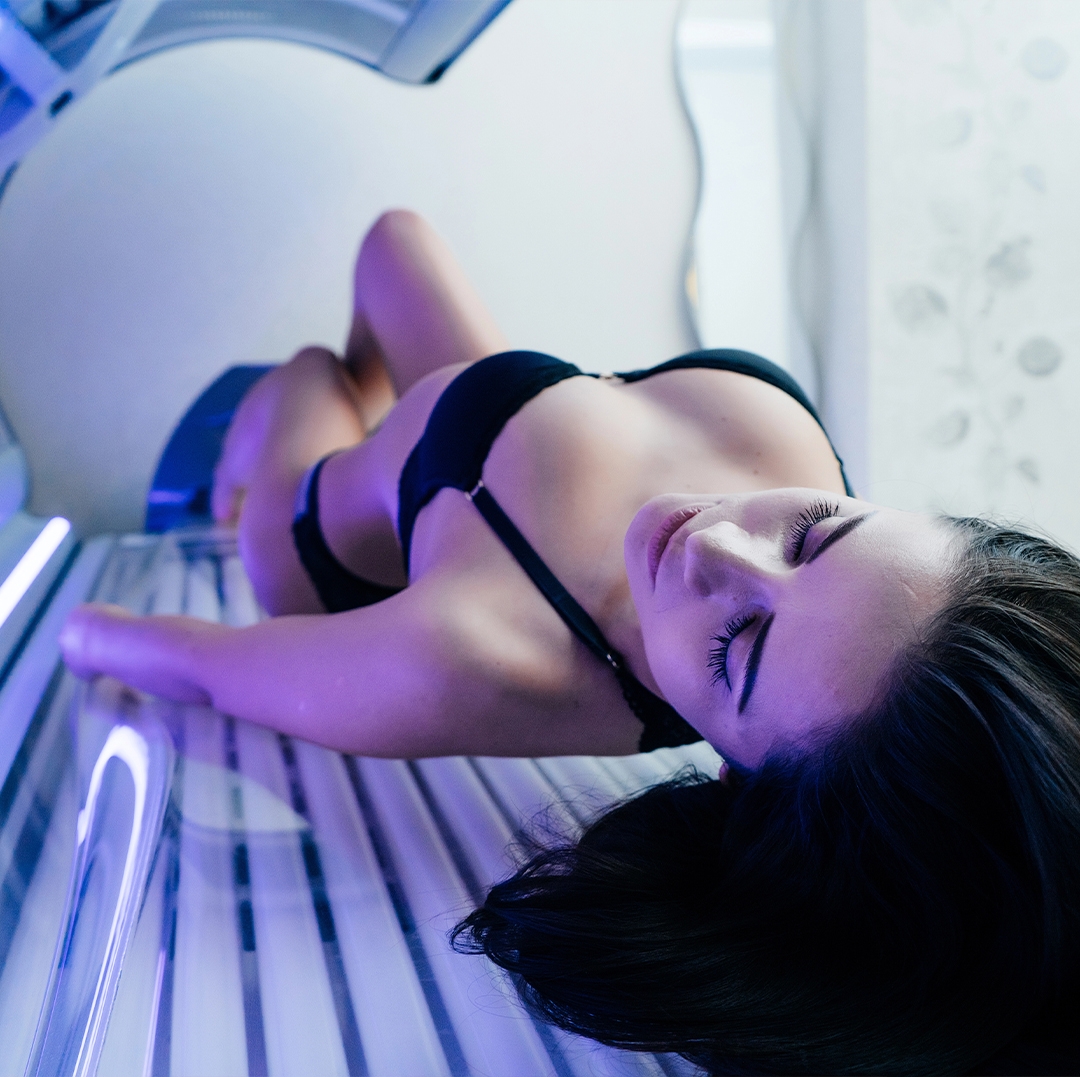
Solaryum ciltte ne tür kalıcı hasarlara yol açar? sorusu, özellikle “kontrollü bronzluk” arayışıyla solaryum kullanan kişiler tarafından sıkça sorulur. Solaryum, çoğu zaman güneşe güvenli bir alternatif gibi algılansa da dermatolojik açıdan bakıldığında bu cihazlar cilt için ciddi ve geri dönüşü olmayan riskler taşır. Solaryumun etkileri yalnızca geçici renk değişikliğiyle sınırlı değildir; hücresel düzeyde başlayan hasarlar yıllar içinde kalıcı cilt sorunlarına dönüşebilir.
Bu yazıda solaryumun ciltte hangi mekanizmalarla hasar oluşturduğunu, bu hasarların neden kalıcı olabildiğini ve neden dermatoloji pratiğinde solaryumun önerilmediğini uzman bakış açısıyla ele alacağız.
Solaryum Nedir ve Cilde Nasıl Etki Eder?
Solaryum cihazları, büyük oranda UVA ışınları yayan yapay bronzlaşma sistemleridir. UVA ışınları, güneşten gelen UVB’ye kıyasla ciltte daha derine nüfuz eder. Yanık hissi daha az olduğu için “zararsız” algısı oluşabilir; ancak bu durum, hasarın olmadığı anlamına gelmez.
UVA ışınları:
- Cildin alt katmanlarına ulaşır
- Kollajen ve elastin liflerine zarar verir
- Hücresel DNA üzerinde birikici hasar oluşturur
Bu hasar çoğu zaman sessiz ilerler ve yıllar sonra belirginleşir.
Solaryumun Yol Açtığı Kalıcı Cilt Hasarları
1. Erken Cilt Yaşlanması (Fotoaging)
Solaryuma bağlı en sık görülen kalıcı hasar erken yaşlanmadır. UVA ışınları, cildin elastikiyetini sağlayan yapıların bozulmasına neden olur.
Bunun sonucunda:
- İnce ve derin kırışıklıklar
- Sarkma
- Elastikiyet kaybı
- Donuk ve cansız cilt görünümü
ortaya çıkar. Bu değişiklikler geri döndürülemez ve yaşlanma sürecini belirgin şekilde hızlandırır.
2. Kalıcı Lekelenmeler ve Renk Düzensizlikleri
Solaryum, melanin üretimini kontrolsüz şekilde uyarır. Bu durum ciltte:
- Güneş lekeleri
- Düzensiz pigment dağılımı
- Kalıcı koyu alanlar
oluşmasına yol açabilir. Özellikle yüz, dekolte ve el sırtı gibi bölgelerde bu lekeler zamanla belirginleşir ve tedavisi zor olabilir.
3. Cilt Bariyerinin Kalıcı Zayıflaması
Solaryum, cilt bariyerini oluşturan hücrelerin yapısını bozar. Zamanla cilt:
- Daha kuru
- Daha hassas
- Dış etkenlere karşı daha savunmasız
hâle gelir. Bu bariyer bozukluğu, uzun vadede egzama, irritasyon ve hassasiyet problemlerini kalıcı hâle getirebilir.
4. DNA Hasarı ve Birikici Etki
Solaryumun en tehlikeli etkilerinden biri, DNA hasarının birikici olmasıdır. Her solaryum seansı, cilt hücrelerinin genetik yapısında küçük hasarlar bırakır. Bu hasarlar:
- Kısa vadede fark edilmez
- Zamanla birikir
- Hücre kontrol mekanizmalarını bozar
Bu süreç, cilt kanseri gelişimi açısından kritik öneme sahiptir.
5. Cilt Kanseri Riskinde Artış
Solaryum kullanımı ile melanom ve melanom dışı cilt kanserleri arasında güçlü bir ilişki vardır. Özellikle genç yaşta solaryum kullanmaya başlayan kişilerde risk belirgin şekilde artar.
Önemli bir nokta şudur:
Solaryumdan alınan UVA ışını, “doğal” ya da “kontrollü” değildir ve kanser riskini azaltmaz. Aksine, riski artırır.
6. Benlerde Değişim ve Yeni Ben Oluşumu
Solaryum, ben hücrelerini de uyarır. Bunun sonucunda:
- Var olan benlerde şekil, renk veya sınır değişiklikleri
- Yeni benlerin ortaya çıkması
gözlenebilir. Bu değişiklikler, cilt kanseri açısından mutlaka dermatolojik değerlendirme gerektirir.
Solaryumun Zararı Kısa Sürede Anlaşılır mı?
Çoğu zaman hayır. Solaryumun oluşturduğu hasar:
- Yıllar içinde ortaya çıkar
- Kademeli ilerler
- Başlangıçta yalnızca “iyi bronzlaşma” gibi algılanır
Bu nedenle birçok kişi solaryumun zararını fark ettiğinde, ciltteki değişiklikler artık kalıcı hâle gelmiştir.
“Arada Bir” Solaryum Daha Güvenli midir?
Hayır. Dermatolojik açıdan güvenli kabul edilen bir solaryum dozu yoktur. Nadiren kullanılsa bile:
- DNA hasarı oluşur
- Yaşlanma süreci hızlanır
- Kanser riski artar
“Az ama sık” ya da “seyrek ama yoğun” kullanım arasında risk açısından net bir güvenli sınır yoktur.
Solaryum Sonrası Hasar Geri Döndürülebilir mi?
Ne yazık ki hayır. Solaryumun yol açtığı:
- DNA hasarı
- Elastikiyet kaybı
- Kanser riski
geri çevrilemez. Dermatolojik tedaviler yalnızca hasarın görünümünü kısmen iyileştirebilir; oluşmuş hasarı tamamen ortadan kaldıramaz.
Bronz Görünüm İçin Daha Güvenli Alternatif Var mı?
Dermatoloji pratiğinde solaryum yerine:
Güneşsiz bronzlaştırıcı ürünler
Cilt tonunu geçici olarak koyulaştıran kozmetik çözümler
tercih edilir. Bu ürünler UV hasarı oluşturmaz ve cilt sağlığı açısından daha güvenlidir.
Ne Zaman Dermatoloğa Başvurulmalı?
Aşağıdaki durumlarda dermatolojik değerlendirme önemlidir:
- Solaryum sonrası kalıcı lekeler oluştuysa
- Ciltte hızla artan kırışıklık ve sarkma fark edildiyse
- Benlerde değişiklik gözleniyorsa
- Ciltte geçmeyen hassasiyet ve kuruluk varsa
Erken değerlendirme, ciddi sonuçların önüne geçebilir.
Sıkça Sorulan Sorular
Solaryum gerçekten güneşten daha zararlı mı?
Evet. Yoğun UVA ışını nedeniyle daha derin ve kalıcı hasar oluşturabilir.
Solaryum kırışıklık yapar mı?
Evet. Erken ve derin kırışıklıklara yol açabilir.
Solaryum cilt kanseri riskini artırır mı?
Evet. Özellikle melanom riskini belirgin şekilde artırır.
Solaryum lekeleri geçer mi?
Bazıları kalıcı olabilir ve tedavisi zorlaşabilir.
Kaç seans solaryum zararlıdır?
Güvenli kabul edilen bir seans sayısı yoktur.
Ne zaman doktora başvurmalıyım?
Solaryum sonrası ciltte kalıcı değişiklikler fark edildiğinde dermatoloğa başvurulmalıdır.

Editör
Tüm Yazıları İncele