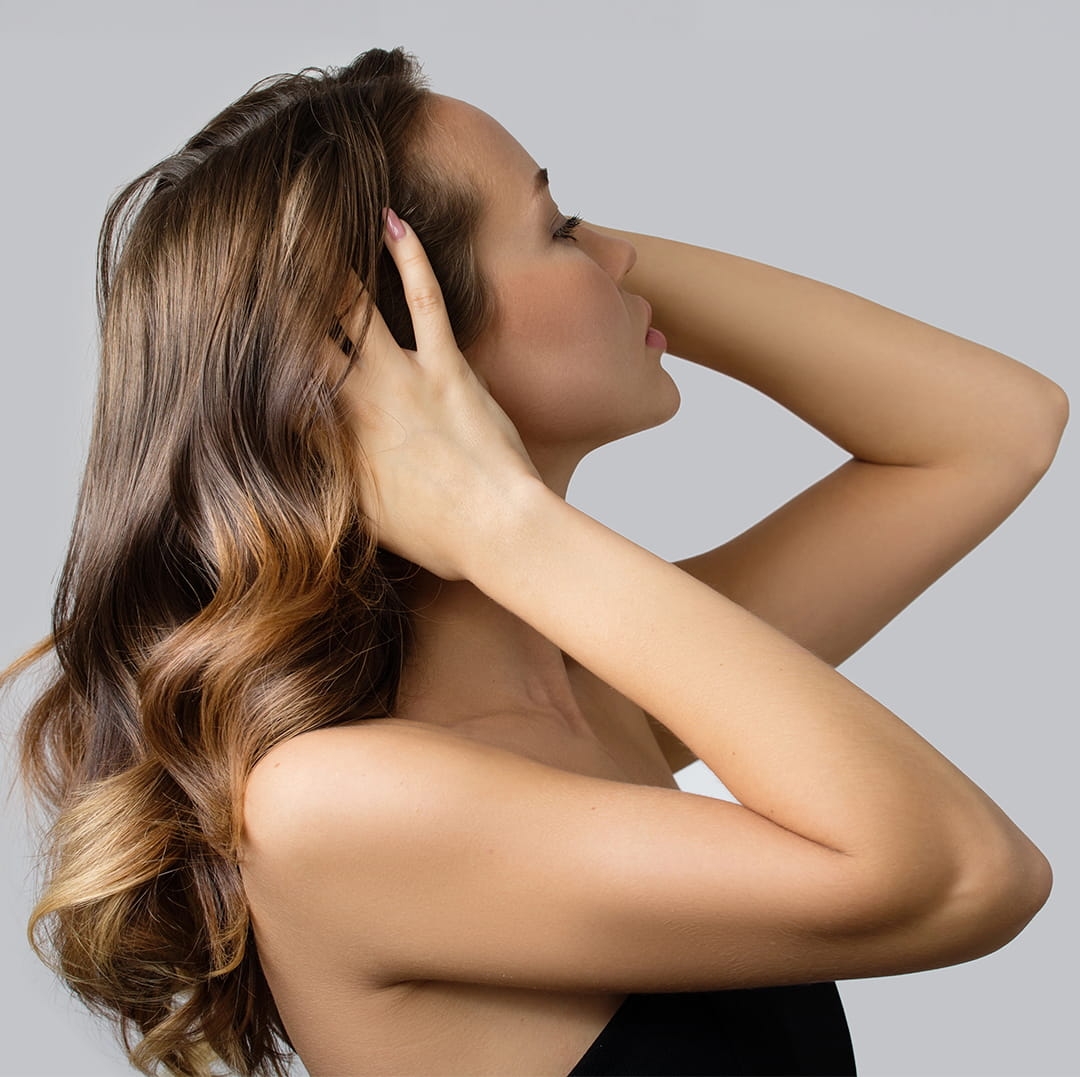
Scalp pain, burning, stinging, or tenderness at the hair roots can occur for various reasons. The term “trichodynia” is used particularly for painful sensations that accompany complaints of hair loss. However, not all scalp pain is trichodynia; skin conditions and other causes that could explain the symptoms need to be evaluated. [1] PubMed Central (PMC)
This guide explains how scalp discomfort can be described, how its relationship with hair loss is assessed, and which information is important during a dermatology examination.
1. What is trichodynia?
Trichodynia is scalp pain described in association with complaints of hair loss. A person may feel discomfort when touching their hair, combing it, or moving it in a different direction. Although the term is used to mean “hair pain,” the assessment focuses on sensory symptoms in the scalp. [1] PubMed Central (PMC)
Trichodynia alone does not explain the cause of hair loss. A study involving people with hair loss did not demonstrate an association between the presence of trichodynia and the measurable amount of hair shedding or the degree of hair thinning. [3] PubMed
2. What does scalp pain feel like?
The symptoms are not described in the same way by everyone. Some people describe a pulling sensation at the hair roots or a bruised feeling in the skin, while others mainly experience burning, stinging, or tingling. Itching may also accompany this discomfort. The scalp may look normal, or redness may be present. [2] Karger
During the appointment, you can describe the sensation in more detail instead of only saying, “My hair roots hurt”: “It hurts when I touch it,” “It burns on its own,” or “It becomes tender after I tie my hair up.” These statements do not establish a diagnosis; they are examples to help you describe the discomfort you experience.
3. Why can it occur alongside hair loss?
The mechanism of trichodynia is not fully understood. Attention has focused on the sensitivity of nerve endings and interactions between the nervous system and the skin. Inflammation around the hair follicles has not been shown to explain the pain in every patient. For this reason, pain should not lead to the conclusion, “There is definitely inflammation in my hair follicles.” [1] PubMed Central (PMC)
Trichodynia has been reported in people with telogen effluvium as well as those with androgenetic alopecia. The coexistence of trichodynia and hair loss does not prove that the sensation of pain directly causes hair loss or indicates its severity. [3] PubMed
4. In which types of hair loss can it occur?
Telogen effluvium
Increased hair shedding may develop after a recent illness, surgery, childbirth, or significant weight loss. If there is such a history, the time of onset and the course of the shedding are assessed. The presence of tenderness alone does not confirm a diagnosis of telogen effluvium. [3, 4] PubMed
Androgenetic alopecia
In female or male pattern hair loss, the hair shafts gradually become finer, and thinning may develop in certain areas. Trichodynia can also occur in these individuals; however, the presence of pain does not necessarily mean that hair loss is progressing rapidly. [3, 4] PubMed
Alopecia areata
Patchy hair loss may develop in alopecia areata. Some people experience tingling, itching, or burning in the affected area just before hair loss occurs. The eyebrows and eyelashes may also be affected. The presence of these symptoms alone does not establish a diagnosis. [5] AAD
5. Is all scalp pain trichodynia?
No. Scalp infections, irritation, and inflammatory skin conditions can cause various sensory symptoms. If scaling, redness, or localized hair loss is present, these findings are investigated separately. Because some hair disorders can lead to permanent hair loss, identifying the cause is important. [4, 6] AAD
Especially if there is a visible rash, sore, or crusting, it is not enough to describe the problem simply as a “sensitive scalp.” The assessment should focus on conditions that could explain these findings. [6] AAD
6. Can hair care products cause pain and tenderness?
Shampoo, hair dye, or other hair products may cause irritation or allergic contact dermatitis in some people. Itching, redness, and a rash may develop. The onset of symptoms after using a product is important; however, timing alone cannot determine whether this is an allergy or irritation. [6] AAD
When preparing for your appointment, make a note of any products you have recently started using. Listing the names of your shampoo, hair dye, serum, oil, dry shampoo, and prescription scalp products together can help you avoid forgetting any of them during the appointment.
7. Can tying your hair up tightly cause tenderness?
Tight ponytails, braids, buns, or practices that constantly pull on the hair can cause pain and stinging. Prolonged pulling can lead to a type of hair loss called traction alopecia. Do not continue wearing a hairstyle that causes pain; change it to reduce the pulling. [7] AAD
If you have a receding hairline, broken hairs, localized thinning, or crusting, point these out during the examination as well. Even if loosening the hairstyle brings relief, any accompanying hair loss still needs to be assessed. [7] AAD
8. Does stress cause trichodynia?
Trichodynia has been reported to be associated with anxiety and other psychological factors. However, this association does not show that all scalp pain has a psychological origin. The conclusion “It is only due to stress” should not be reached without investigating physical causes that could explain the symptoms. [1] PubMed Central (PMC)
During the examination, you can share your own observations: “I notice it more during busy periods” or “My discomfort increases when my sleep is irregular.” Such an observation is not, on its own, a test that determines the cause.
9. What is scalp dysesthesia?
Scalp dysesthesia is a term used to describe abnormal sensations that cannot be explained by a clear skin finding on examination. It may present with symptoms such as pain, burning, or itching. Some studies have investigated its association with changes in the cervical spine. [8] PubMed
These studies do not show that everyone who experiences scalp pain has a neck condition or needs imaging. If you have additional symptoms, such as neck pain, informing your physician may contribute to the assessment. [8] PubMed
10. What is assessed during a dermatology examination?
The physician listens to how the symptoms began and progressed and examines the scalp and the distribution of any hair loss. The hair shafts, nails, or other areas of the body with hair may also be included in the assessment. Examination under magnification can help provide a more detailed view of the scalp. [9] AAD
When preparing for the appointment, you can note where the pain is, whether it occurs when touched or on its own, and when the hair loss began. You can prepare a description like the following regarding your previous treatments:
“I have had tenderness at the crown of my head for about two months. I feel it more when I comb my hair. I had noticed hair loss before that. I have brought a list of the products I use.”
11. Does every patient need blood tests?
No. The same vitamin or hormone panel is not ordered for everyone with scalp tenderness. The history of any accompanying hair loss and the examination findings determine which investigations may be necessary. If a specific disease, deficiency, or infection is suspected, blood tests or other investigations may be requested. [9] AAD
You can bring your previous results to the examination. Clarifying the need for new tests during the appointment is more appropriate than drawing up an extensive list of tests on your own solely because of tenderness. [9] AAD
12. How is trichodynia treated?
There is no single standard treatment for trichodynia that can be used for everyone. First, any accompanying hair loss, scalp disease, and possible triggers are assessed. The treatment plan is tailored to the condition identified and the individual’s symptoms. [10] PubMed
Scientific publications have discussed various topical and oral treatments. However, a method’s inclusion in scientific publications does not mean that it is suitable for everyone or certain to be effective. Do not start using corticosteroid products, numbing creams, or medications that act on the nervous system on your own. [10] PubMed
When speaking with your physician, you can clarify the following questions: “Does this treatment target the pain or the accompanying hair disorder?”, “When will we assess the response?” and “What should I do if the discomfort increases?”
13. What should you pay attention to at home?
Review hair care practices that worsen the symptoms. In a sensitive scalp, heat, certain cosmetics, and mechanical factors may trigger discomfort. Reducing irritating practices and simplifying the care routine can be part of the assessment and treatment process. [2] Karger
Loosen hairstyles that pull on your hair; do not continue the same practice despite pain. If tenderness increases after vigorous combing or tying your hair up tightly, mention this during the examination. [7] AAD
In your own tracking notes, you can keep together the products used, the times when symptoms worsen, and the changes you observe during treatment. This allows you to describe the course more clearly at the next appointment rather than simply saying, “It has not gone away.”
14. When should you see a dermatologist?
Seek an assessment for scalp discomfort that persists or recurs, especially if hair loss is also present. Itching or burning may have different causes; an examination may be needed to determine the appropriate approach. [6, 9] AAD
If you have sudden patches of hair loss, eyebrow or eyelash loss, progressive thinning along the hairline, or noticeable changes in the scalp, do not delay seeking care. These findings alone do not establish a specific diagnosis, but their causes need to be investigated. [5, 7] AAD
Frequently Asked Questions
1. Is it normal for the hair roots to hurt?
Recurring pain or tenderness should be assessed, especially if accompanied by hair loss. The appearance of the scalp and accompanying symptoms are important. [6, 9] AAD
2. Does trichodynia cause hair loss?
They may occur together; however, this does not prove that the sensation of pain directly causes hair loss. [3] PubMed
3. Does pain mean there is more hair loss?
This conclusion cannot be drawn. Studies have not demonstrated a direct association between the presence of trichodynia and the measurable amount of hair shedding. [3] PubMed
4. Does trichodynia occur only in women?
No. It can occur in both women and men; some studies have reported it more frequently in women. [3] PubMed
5. Should I ignore the pain if my scalp looks normal?
A normal appearance does not mean that the symptoms are absent. Sensations such as pain or burning can occur even without visible changes. [2] Karger
6. Is pain when combing my hair trichodynia?
It may be; however, a diagnosis cannot be made based on this symptom alone. The circumstances associated with the symptoms should be assessed. [10] PubMed
7. Can hair dye cause sensitivity?
Some hair dyes may cause irritation or allergic contact dermatitis. Tell your physician about symptoms that begin after dyeing your hair. [6] AAD
8. Do I need to take vitamins?
Not every patient does. The need for supplements is determined by assessing any deficiencies and other findings. [9] AAD
9. Can tying my hair loosely help?
Loosening the hairstyle is important when discomfort is caused by pulling. However, persistent pain and hair loss should also be assessed. [7] AAD
10. Does trichodynia go away completely?
The course varies from person to person. The underlying condition and response to treatment are important; there is no single approach that produces the same outcome for everyone. [10] PubMed
References and Institutional Patient Information Resources
[1] Trüeb RM et al. Trichodynia Revisited. Skin Appendage Disorders. 2021;7(6):449–453.
[2] Souza EN et al. Sensitive Scalp and Trichodynia: Epidemiology, Etiopathogenesis, Diagnosis, and Management. Skin Appendage Disorders. 2023;9(6):407–415.
[3] Willimann B, Trüeb RM. Hair pain (trichodynia): frequency and relationship to hair loss and patient gender. Dermatology. 2002;205(4):374–377.
[4] American Academy of Dermatology. Hair loss: Who gets and causes.
[5] American Academy of Dermatology. Hair loss types: Alopecia areata signs and symptoms.
[6] American Academy of Dermatology. 10 reasons your scalp itches and how to get relief.
[7] American Academy of Dermatology. Hairstyles that pull can lead to hair loss.
[8] Thornsberry LA, English JC III. Scalp dysesthesia related to cervical spine disease. JAMA Dermatology. 2013;149(2):200–203.
[9] American Academy of Dermatology. Hair loss: Diagnosis and treatment.
[10] Rodriguez-Tamez G et al. Dermatology Update on the Challenging Trichodynia. Actas Dermo-Sifiliográficas. 2025;116(9):T990–T994.
This content is for general information purposes; it is not a personal diagnosis or treatment recommendation. The cause of scalp pain, necessary investigations, and treatment plan are determined by a physician’s assessment.
Editör
View All Articles