

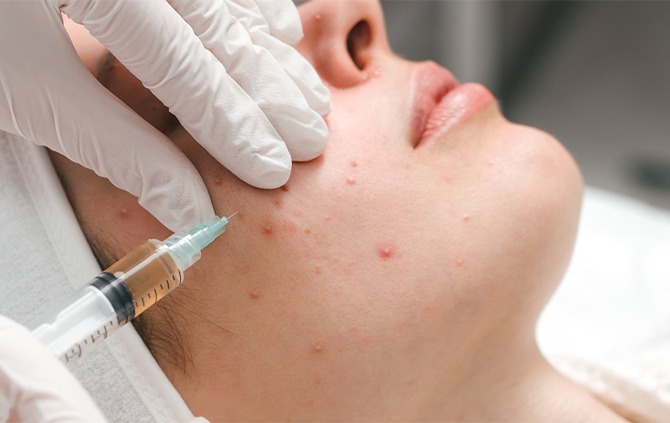
Acne problems, which are increasing today, are not only seen in young people. The frequency of the disease during adolescence is around 90%. However, studies conducted in recent years have shown that the frequency of the disease, especially in female patients, increases after adolescence. Acne is triggered by hormone levels, diet, smoking, emotional stress and cosmetics in genetically predisposed individuals. In addition, not cleaning the skin, not moisturizing the skin properly and not paying attention to the use of sunscreen also cause acne.
Before starting acne treatment, it is important for patients and their families to be informed about the pathogenesis of acne, its course, complications, and duration of treatment.
Acne treatment can be planned as topical or systemic treatment depending on the clinical severity of the disease. The patient expects that acne lesions will regress rapidly and will not recur. However, the first clinical response with treatment is obtained within 6-8 weeks. Depending on the effectiveness of the treatment and the treatment agents used, the treatment is continued for a minimum of three months. It should not be forgotten that more success can be achieved in acne treatment by recommending a diet low in milk, low glycemic index foods, vegetables and fruits.
Although the relationship between acne vulgaris and diet has not been clarified, studies in recent years have shown that consuming diets with a high glycemic index (characterized by excessive consumption of meat, fat, and dairy proteins) and low in omega-3 fatty acids contribute to acne formation. With a high glycemic diet, androgen production caused by increased insulin secretion causes the development of acne lesions. By the same mechanism, acne development is stimulated in obese individuals in the presence of increased insulin levels, but an increased risk is not observed in obese individuals without high insulin levels.
It has been suggested that bioactive molecules and hormones found in milk may also trigger acne. It has been reported that skim milk increases acne more because fatty milk contains more estrogen. Skim milk also lacks acne-healing lipophilic vitamins (vitamin A, D). Milk contains estrogen, progesterone, and precursor androgens such as androstenedione and dehydroepiandrosterone sulphate, which are comedogenic; it also contains protein, carbohydrates, IGF-1 and increases the glycemic index, and IGF-1 levels are not affected by pasteurization and homogenization processes.
- There are conflicting results in studies on chocolate.
- In patients with PCOS (Polycystic ovary disease), metformin treatment reduces serum IGF-1 and androgen levels and provides improvement in acne.
- The combination of nicotinamide, azelaic acid, zinc, pyridoxine, copper and folic acid has been shown to be effective in acne.
It is reported that greater success can be achieved in acne treatment by recommending a diet low in dairy, low glycemic index foods, vegetables and fruits.
The ideal diet for acne patients should include plenty of vegetables, fruits, grains, fish, and green tea; milk and dairy products, foods with a high glycemic index, and carbohydrates should be consumed in smaller amounts.

Doç. Dr. Işıl Bulur
View All Articles