
When are moles risky? What is the ABCDE rule? This is one of the most critical questions encountered in dermatology practice, particularly in terms of early diagnosis. The vast majority of moles on the skin are benign; however, certain changes that develop over time may be early warning signs of melanoma, one of the most dangerous types of skin cancer. For this reason, moles should not be considered merely cosmetic features, but dermatological structures that require regular monitoring.
In this article, I will address when moles are considered risky, what the ABCDE rule means, and in which situations a dermatologist should be consulted—through an authoritative, clinician-focused perspective.
What Is a Mole (Nevus)?
Moles, medically referred to as nevi, are skin lesions formed by clusters of pigment-producing cells called melanocytes. They may be present at birth or develop during childhood and early adulthood. Their color can range from light brown to dark black, and they may appear flat or raised.
Not every mole is dangerous. In fact, most individuals have between 10 and 40 benign moles. What truly matters is not the number of moles, but their behavior and changes over time.
When Are Moles Considered Risky?
One of the most common questions patients ask is, “Which moles are risky?” Clinically suspicious moles often show one or more of the following features:
- Noticeable growth over a short period
- Changes in color or the presence of multiple colors within the same mole
- Irregular or blurred borders
- Itching, bleeding, or crusting
- The appearance of a new mole in adulthood
It is important to emphasize that a mole does not need to be painful or bleeding to be risky. Subtle, silent changes are often more significant.
What Is the ABCDE Rule?
One of the most practical and reliable methods used in dermatology to evaluate moles is the ABCDE rule. This rule was developed to guide both physicians and individuals during skin self-examinations.
A – Asymmetry
Benign moles are usually symmetrical. When divided into two equal halves, both sides look similar.
Risky moles often show asymmetry, where one half does not match the other.
B – Border
Healthy moles typically have smooth, well-defined borders.
Suspicious moles may have irregular, jagged, or poorly defined edges.
C – Color
Benign moles are usually uniform in color.
The presence of multiple shades—such as black, brown, gray, red, or blue—within a single mole can be a warning sign.
D – Diameter
The commonly accepted threshold is 6 mm (approximately the size of a pencil eraser).
However, size alone is not sufficient. Smaller moles that show rapid changes may also be risky.
E – Evolution
This is the most important criterion.
Any change over time in size, shape, color, surface, or sensation (such as itching or tenderness) should be taken seriously.
Is Every Large Mole Dangerous?
This is another frequently asked question. No, not every large mole is dangerous. Some individuals have congenital moles that are large yet completely benign. The key factor is stability. A mole that has remained unchanged for years is evaluated differently from one that has changed noticeably within months.
Who Is at Higher Risk?
Certain individuals have a higher risk profile and should undergo more regular mole monitoring:
- Fair-skinned individuals with light eyes
- People with a high number of moles
- Those with a history of severe sunburns in childhood
- Individuals with a family history of melanoma
- People who have used tanning beds
For these groups, annual dermatological examinations are particularly important.
How Should Mole Monitoring Be Performed?
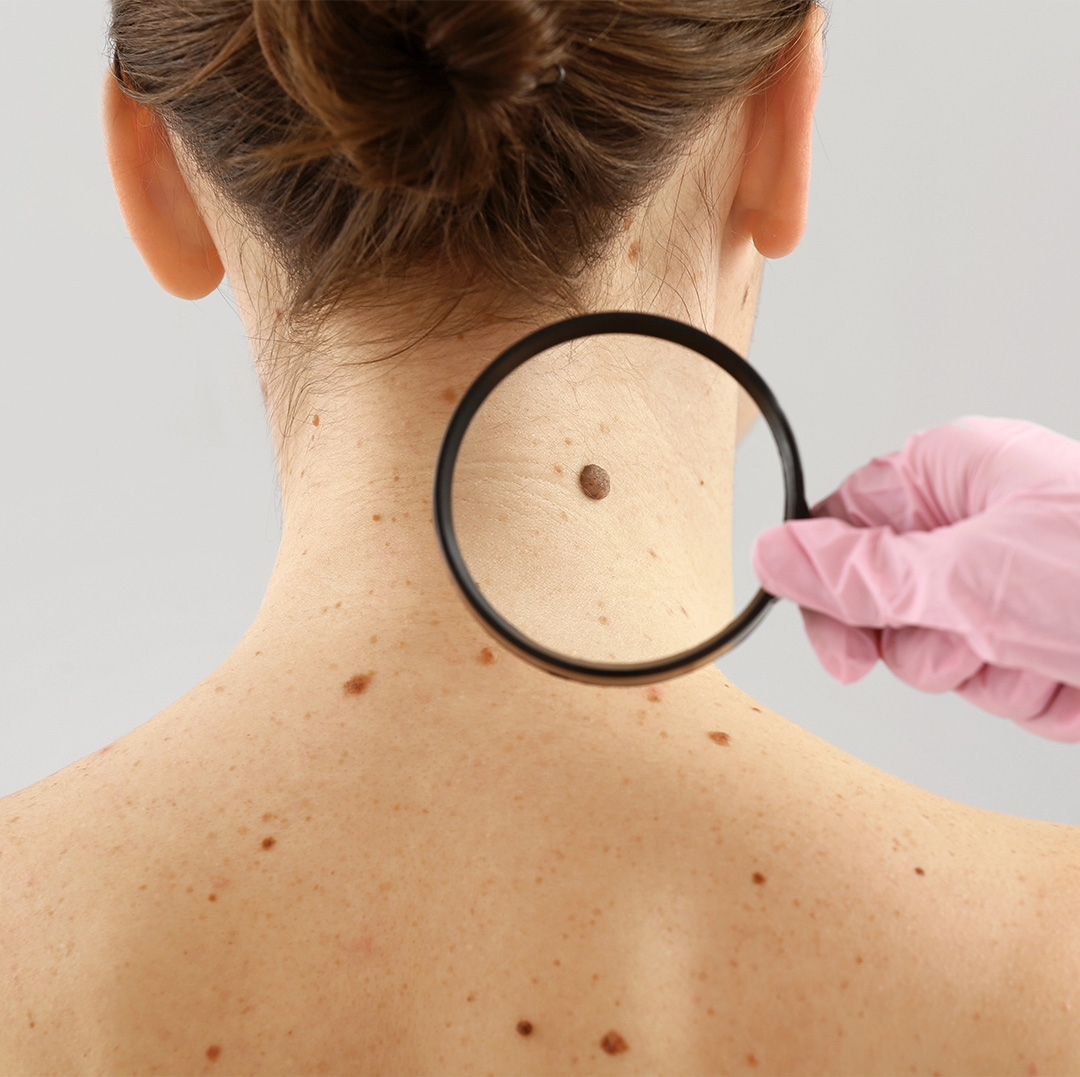
Professional mole monitoring is conducted by a dermatologist using specialized magnification devices known as dermoscopes. In selected cases, digital mole mapping may be used to record images of moles and objectively compare changes over time.
Monthly self-skin examinations are also highly valuable for early detection. Areas such as the back, scalp, neck, and soles of the feet—often overlooked—should be checked using mirrors when necessary.
Frequently Asked Questions
Does every mole that meets the ABCDE criteria mean cancer?
No. However, moles that meet these criteria should always be evaluated by a dermatologist.
Why do moles change over time?
Hormonal changes, sun exposure, and aging can all affect the appearance of moles.
Is every itchy mole dangerous?
No. But itching combined with other changes may be significant.
Does removing a mole increase melanoma risk?
No. On the contrary, appropriate removal of suspicious moles can be protective.
Is mole monitoring necessary in children?
Yes. Rapidly growing or changing moles in children should be monitored.
Does sun protection affect moles?
Yes. Regular use of sunscreen reduces the risk of harmful changes in moles.

Editör
View All Articles