

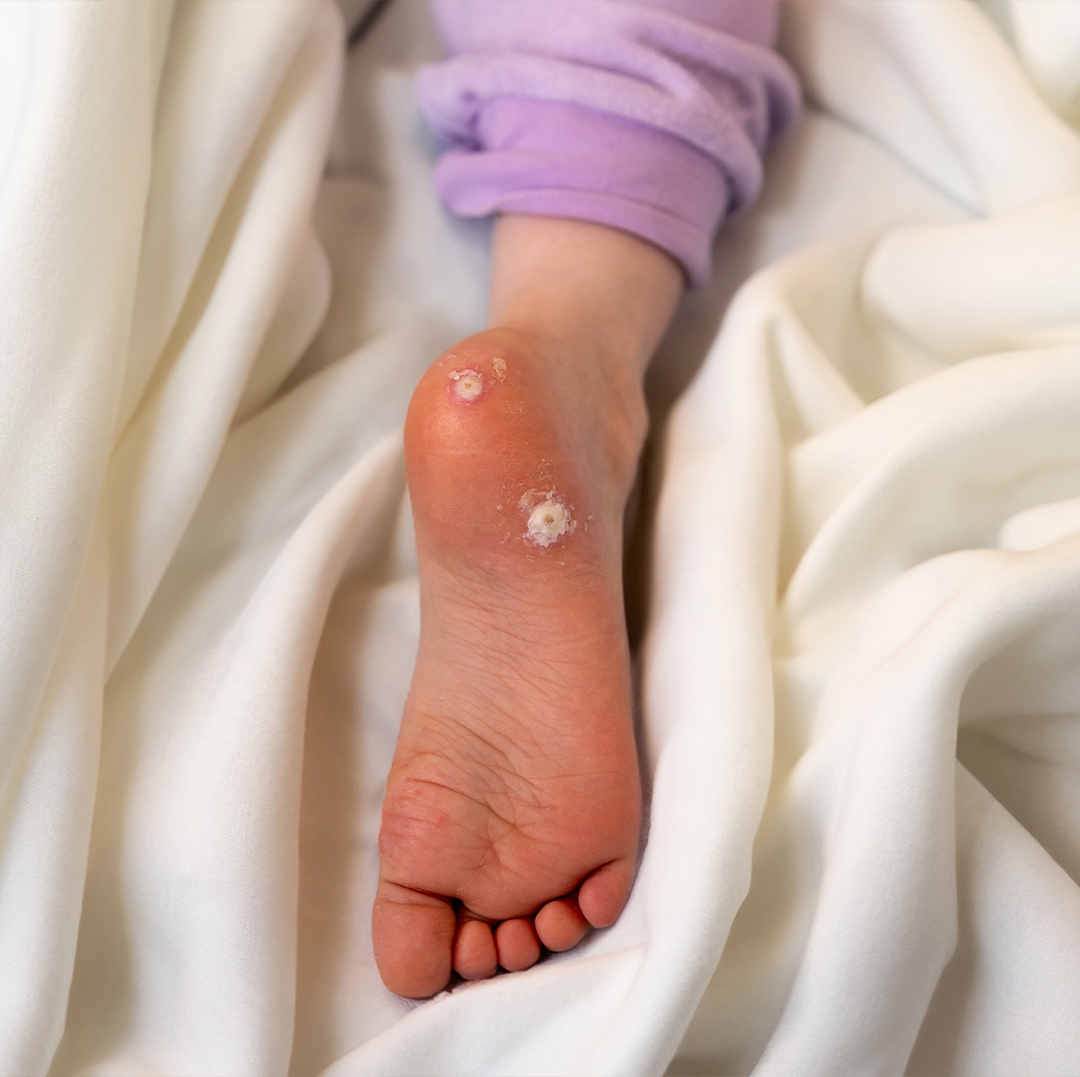
Why are warts more common in children? This is a frequent concern among parents visiting dermatology clinics. Warts are usually benign skin lesions, but their higher prevalence in childhood compared to adulthood is not coincidental. The main reasons include the developing immune system, frequent close contact in daily life, and the characteristics of a child’s skin barrier.
In this article, we will explain why warts occur more often in children, which factors increase the risk, and when dermatological evaluation is necessary—from a dermatologist’s clinical perspective.
What Is a Wart?
Warts are skin lesions caused by infection with the Human Papillomavirus (HPV). They typically appear as skin-colored or slightly darker, rough-surfaced growths. Common locations include the hands, fingers, soles of the feet, knees, and elbows.
Warts are contagious; however, not everyone exposed to the virus develops a wart. The body’s immune response plays a key role in determining whether infection becomes clinically visible.
Why Are Warts More Common in Children?
1. Immune System Not Fully Mature
A child’s immune system is still developing and may not mount an immediate or effective response against HPV. As a result, the virus can more easily establish infection and cause wart formation.
2. Close Contact and Shared Environments
Children frequently spend time in:
- Schools and daycare centers
- Playgrounds
- Swimming pools and sports facilities
Shared surfaces, toys, and floors increase the likelihood of viral transmission.
3. Easier Disruption of the Skin Barrier
Children’s skin is thinner and more sensitive. Minor cuts, scratches, nail biting, or picking at the skin can create entry points for the virus.
4. Insufficient Foot Protection
Plantar warts are particularly common in children. Walking barefoot in moist environments such as pools, locker rooms, and communal showers significantly increases the risk of infection.
5. Autoinoculation (Self-Spread)
Children are more likely to touch, scratch, or pick at their warts. This behavior can spread the virus to other areas of the body.
Types of Warts Commonly Seen in Children
The most common wart types in childhood include:
Verruca vulgaris: Common warts on the hands and fingers
Plantar warts: Painful warts on the soles of the feet
Flat warts: Small, smooth warts often found on the face or legs
The type of wart influences treatment decisions.
Are Warts Dangerous?
Most warts in children are benign and do not pose a serious health risk. In some cases, they may resolve spontaneously as the immune system recognizes and clears the virus.
However, warts should be evaluated by a dermatologist if they:
- Spread rapidly
- Cause pain
- Bleed or appear infected
- Are located on the face or genital area
Do Warts Go Away on Their Own?
Yes, many warts in children may disappear spontaneously over months or even years. However, during this time, they may spread or interfere with daily activities.
Waiting too long without evaluation—especially if the warts are increasing in number—is not always the best approach.
When Should a Dermatologist Be Consulted?
Dermatological evaluation is recommended if:
- The number of warts increases quickly
- Plantar warts cause pain while walking
- Warts appear on the face, lips, or around the nails
- Home treatments are ineffective
- The child persistently picks or scratches the warts
A dermatologist can select the safest and most appropriate treatment based on the child’s age and wart type.
Can Warts in Children Be Prevented?
While complete prevention is not always possible, the risk can be reduced by:
- Wearing slippers in communal areas
- Discouraging nail biting and skin picking
- Avoiding behaviors that damage the skin barrier
- Washing hands after touching warts
- Covering warts to prevent scratching
These measures help reduce both transmission and self-spread.
Frequently Asked Questions
Are warts contagious in children?
Yes. Warts are caused by a virus and can spread through direct or indirect contact.
Does every exposure to HPV cause warts?
No. Individuals with a strong immune response may never develop visible warts.
Can warts spread at school?
Yes. Close contact and shared surfaces increase the risk of transmission.
Is it safe to remove warts at home by picking them?
No. Picking can spread the virus and increase the risk of infection.
Is wart treatment difficult in children?
With appropriate methods, treatment is usually effective.
Do warts come back after treatment?
Yes. Because the virus can persist in the skin, recurrence is possible.

Editör
View All Articles