
Over time, dead skin cells, fine facial hair (peach fuzz), makeup residue, and environmental buildup can leave the skin looking dull and uneven. Dermaplaning, a technique that has gained popularity in recent years, is a mechanical exfoliation method that helps smooth the skin’s surface and promote a brighter appearance. When performed properly and under the right conditions, dermaplaning can provide an immediate sense of improved texture and luminosity as part of supportive skincare.
Dermaplaning is not a treatment method; rather, it is a part of a surface-level skincare routine. It affects only the outer layer of the epidermis and aims to support the skin’s natural renewal process. Because every individual’s skin type and sensitivity differ, it should always be evaluated and performed by a qualified professional.
What Is Dermaplaning?
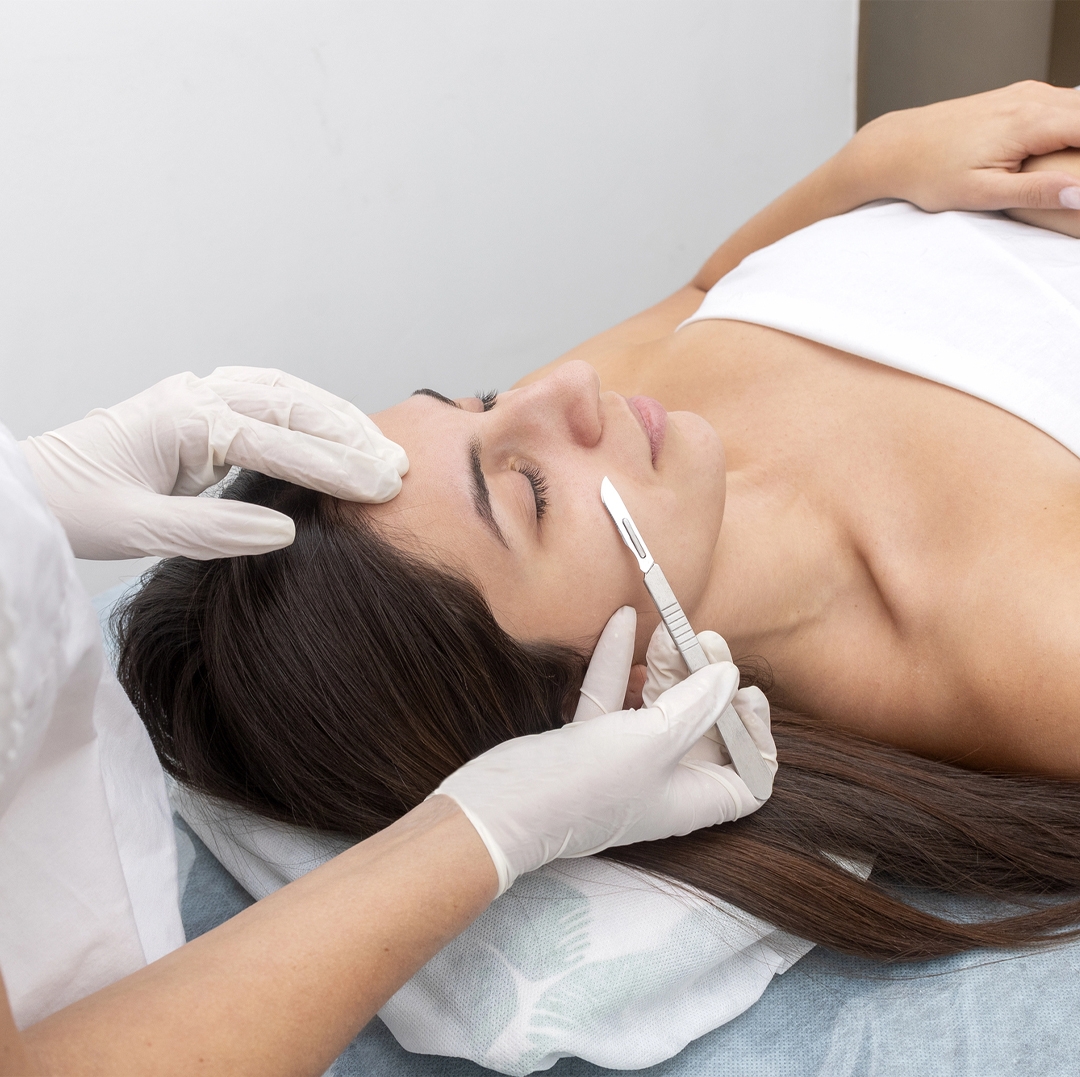
Dermaplaning involves using a sterile, single-use scalpel-like blade to gently remove dead skin cells and fine vellus hairs from the surface of the skin. The procedure does not involve deep cutting or peeling; instead, it provides a controlled mechanical exfoliation on the upper epidermis.
With this approach:
- The skin surface appears smoother,
- Makeup application can look more even,
- Skincare products may distribute more uniformly,
- Dullness may be replaced with a more radiant tone.
How Does Dermaplaning Make the Skin Brighter?
Skin appears brighter when light reflects evenly off its surface. Dead cells and buildup scatter light, creating a dull look. When dermaplaning removes this superficial layer:
- The skin becomes smoother,
- Light is reflected more evenly,
- A temporary “instant glow” effect may occur.
This brightness is short-lived and best considered as part of regular skincare maintenance.
When Can Dermaplaning Be Supportive?
With dermatological approval, dermaplaning may be helpful in the following situations:
Dull-Looking Skin
Removing dead cells from the surface can create an immediate refreshed appearance.
Prominent Peach Fuzz
Dermaplaning can reduce the visibility of fine facial hair, allowing makeup to apply more smoothly.
Makeup Buildup Concerns
It may help prevent foundation and concealer from clumping in textured areas.
Mild Textural Irregularities
It may support a more even surface appearance.
Before Other Skincare Applications
Masks and moisturizers may spread more evenly after dermaplaning.
These benefits do not constitute a treatment promise; they are supportive in nature.
Who Should Avoid Dermaplaning?
Dermaplaning may not be recommended in situations such as:
- Active acne
- Open wounds or infections
- Severe sensitivity
- Compromised skin barrier
- Rosacea-prone or highly reactive skin
In these cases, irritation and redness may worsen. A dermatologist must determine suitability.
What to Expect After Dermaplaning
Common temporary effects include:
- Mild redness
- Temporary sensitivity
- A slight warmth on the skin surface
- These generally resolve quickly.
Because the skin may be more sensitive to sunlight afterward, daily sunscreen use is essential. Hydrating products can help support the skin barrier post-procedure.
Does Dermaplaning Make Hair Grow Thicker?
There is no scientific evidence that dermaplaning causes hair to grow thicker. The hairs removed are fine vellus hairs, and their growth patterns are genetically determined. Mechanical removal does not change their structure.
Frequently Asked Questions
Does dermaplaning increase or thicken facial hair?
No. Hair structure is genetically determined; the procedure does not cause thickening.
Can dermaplaning trigger acne?
It is not recommended for active acne, but when performed professionally on healthy skin, it does not cause additional congestion.
How long do the results last?
The bright, smooth effect typically lasts a few days and can be maintained with regular care.
Is at-home dermaplaning safe?
Home tools may increase the risk of irritation. Professional application is recommended.
Who should avoid dermaplaning?
Individuals with rosacea, active acne, infections, or significant sensitivity may not be ideal candidates.
This content is for informational purposes only; please consult a qualified healthcare professional for diagnosis and treatment.

Editör
View All Articles