
Why do fine capillaries become more visible on the skin? This is a common reason for dermatology consultations, particularly when redness and visible vessels appear on the face. Medically referred to as telangiectasia, this condition is often perceived as a purely aesthetic concern. However, in some individuals, it may reflect underlying dermatological or systemic factors. Understanding why capillaries become visible is essential for choosing the correct approach and management strategy.
In this article, we will discuss the causes of visible fine capillaries, who is more prone to developing them, and when dermatological evaluation is necessary—through a dermatologist’s clinical perspective.
What Are Capillaries (Telangiectasia)?
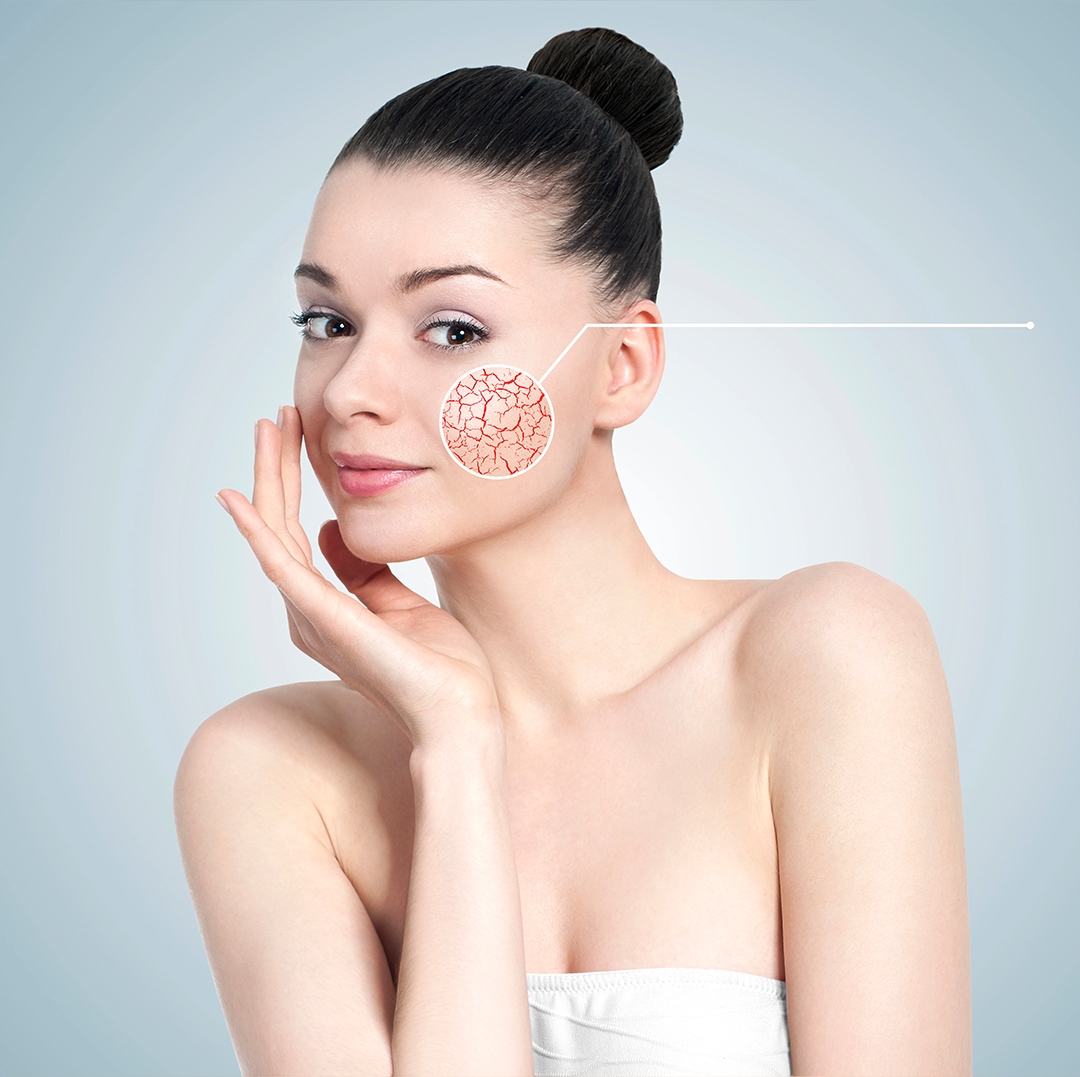
Capillaries are very small blood vessels located close to the surface of the skin. Under normal conditions, they are not noticeable to the naked eye. In certain situations, however, these vessels dilate, move closer to the skin surface, and become visible as red, purple, or bluish lines.
They are most commonly seen on the face (especially the sides of the nose and cheeks), legs, and décolleté area.
Why Do Fine Capillaries Appear on the Skin?
The question “Why do capillaries become visible?” rarely has a single answer. In most cases, multiple factors contribute simultaneously:
1. Genetic Predisposition
Individuals with a family history of visible capillaries are more likely to develop them. In fair-skinned people, blood vessels tend to be more noticeable beneath the skin, increasing visibility.
2. Sun Exposure
Chronic and unprotected sun exposure weakens the skin’s collagen structure. As the supportive tissue deteriorates, blood vessels dilate more easily and become more apparent on the skin surface.
3. Skin Thinning and Aging
As we age, the skin naturally becomes thinner. Thinner skin provides less coverage for underlying vessels, making capillaries more visible over time.
4. Rosacea
Rosacea is a chronic skin condition characterized by persistent facial redness and dilated capillaries. Prominent vessels on the cheeks and around the nose are typical features of this condition.
5. Hormonal Changes
Pregnancy, oral contraceptives, hormone therapies, and certain endocrine disorders can affect vascular structure, leading to increased capillary visibility.
6. Heat Exposure and Repeated Vasodilation
Frequent hot showers, saunas, steam baths, sudden temperature changes, and intense exercise can cause repeated dilation and constriction of blood vessels. Over time, this may result in permanent vessel enlargement.
7. Long-Term Use of Topical Corticosteroids
Prolonged and inappropriate use of corticosteroid creams—especially on the face—can thin the skin and make capillaries more prominent.
Are Visible Capillaries Dangerous?
In most cases, visible capillaries are not medically dangerous and do not indicate a serious systemic disease. However, further evaluation may be necessary if:
- There is a sudden and rapid increase in their number
- They appear widespread and symmetrically
- They are accompanied by bruising, bleeding, or pain
In such cases, underlying vascular or connective tissue disorders should be considered.
Do Visible Capillaries Go Away on Their Own?
This is one of the most frequently asked questions. Unfortunately, once capillaries become clearly visible, they usually do not disappear on their own. Avoiding triggering factors may reduce the formation of new vessels, but existing ones typically require dermatological treatment to improve.
Habits That Can Worsen Capillary Visibility
Certain everyday habits may unknowingly aggravate the condition:
- Not using sunscreen regularly
- Washing the face with very hot water
- Harsh exfoliation and aggressive skincare routines
- Frequent use of alcohol-based products
- Smoking
Managing these factors can help slow the progression and reduce new capillary formation.
When Is Dermatological Evaluation Necessary?
Consulting a dermatologist is recommended if:
- Capillary visibility increases rapidly
- Persistent facial redness is present
- The appearance becomes aesthetically disturbing
- There is no improvement despite previous interventions
A professional evaluation ensures accurate diagnosis and an individualized treatment plan.
Frequently Asked Questions
Are visible capillaries only seen in older individuals?
No. Genetic factors, sun damage, and conditions like rosacea can cause them even at a young age.
Are facial capillaries always a sign of rosacea?
Not always. However, if they are accompanied by persistent redness, rosacea should be considered.
Can skincare alone eliminate visible capillaries?
Skincare may slow progression, but it usually cannot completely remove existing capillaries.
Does sunscreen help prevent capillaries?
Yes. Regular sunscreen use significantly reduces the risk of developing new visible capillaries.
Can corticosteroid creams cause visible capillaries?
Yes. Long-term and uncontrolled use, especially on the face, can lead to capillary prominence.
Do visible capillaries pose a health risk?
Usually no. However, sudden or widespread appearance warrants dermatological evaluation.

Editör
View All Articles