
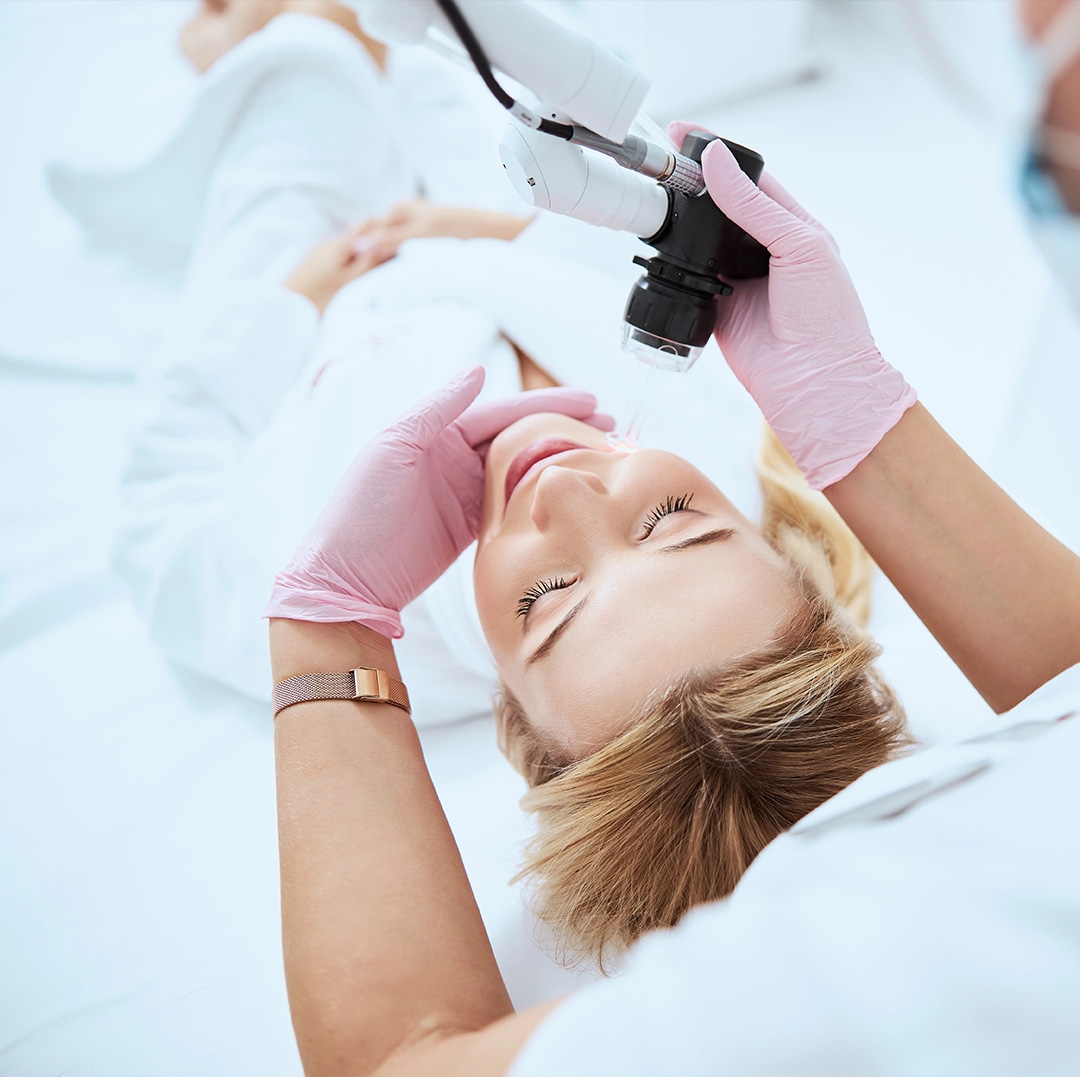
What is a carbon dioxide (CO₂) laser, and when is it preferred? With the advancement of technology in dermatology, various energy-based systems have begun to be used for addressing skin surface irregularities, signs of aging, and renewal concerns. One of the longest-standing tools in this area is the carbon dioxide laser system. Individuals who research skin texture, pigmentation irregularities, or surface renewal frequently come across CO₂ laser technology and wonder how it works and in which situations it is considered.
In this article, I explain CO₂ laser technology from a scientific and informational standpoint—its mechanism, its role in dermatology, and in which situations it is commonly researched—while fully complying with medical advertising regulations.
What Is a CO₂ Laser?
A carbon dioxide (CO₂) laser is a type of laser that operates at a wavelength of 10,600 nm, which is strongly absorbed by water-rich tissues. Because the skin contains a high amount of water, the CO₂ laser can create a controlled effect on the upper layers of the skin.
There are two main forms of CO₂ lasers:
Ablative CO₂ lasers (primarily affecting the surface)
Fractional CO₂ lasers (delivering energy in micro-columns for a more controlled renewal response)
Both approaches work by stimulating the skin’s natural repair and renewal mechanisms.
How Does the CO₂ Laser Work on the Skin?
To comply with regulations, the mechanism is explained without procedural details, focusing purely on biological principles.
The CO₂ laser works through several processes:
Thermal Absorption Through Water Molecules
CO₂ laser energy is absorbed by the water content in the skin’s upper layers.
This absorption produces controlled heat.
Controlled Micro-Injury
The laser creates micro-level stimulation on the skin, activating the body’s repair response.
Collagen and Elastin Support
During the healing process, the skin may show:
Increased collagen production
Reorganization of elastin fibers
A more compact tissue structure
Contribution to Surface Renewal
For this reason, CO₂ lasers are often researched in relation to:
Texture irregularities
Tone unevenness
Dull appearance
These effects occur as a result of the skin’s own biological repair mechanisms.
In Which Situations Is the CO₂ Laser Commonly Researched?
CO₂ laser systems are among the most widely researched energy technologies in dermatology.
People often look into CO₂ laser in the following situations:
Desire for Skin Renewal
Those who experience dullness, uneven texture, or signs of photoaging often explore CO₂ lasers.
Surface-Level Scar Appearance
Individuals researching methods to soften the appearance of facial scars often encounter CO₂ laser information.
Pigmentation Irregularities
Sun-induced discoloration and uneven tone are common reasons to research this technology.
Enlarged Pores
Because it supports surface tightening, CO₂ laser is frequently mentioned in this context.
Early Signs of Aging
People concerned with fine lines, elasticity loss, or surface roughness often review CO₂ laser options.
Certain Surface-Level Skin Growths
Some superficial skin formations may be evaluated for CO₂ laser by authorized medical professionals.
These points are strictly informational and do not constitute directive health guidance.
Whether a CO₂ laser is suitable depends entirely on individual skin characteristics and must be assessed by authorized healthcare professionals.
What Are the Advantages of CO₂ Laser Technology?
A CO₂ laser cannot be described as “better” or “superior” to any other system.
Such comparative claims are prohibited by regulation.
However, its distinctive characteristics can be summarized as:
Strong affinity for water-rich tissue
Ability to stimulate controlled renewal
Support for collagen production
Contribution to smoother and more even-looking skin
These effects are not permanent; the skin continues to change due to age, environment, and lifestyle.
Who May Be Suitable for CO₂ Laser?
Suitability depends on:
- Skin type
- Age
- Current skin conditions
- Genetic factors
- Medication use
- Skin barrier status
Situations requiring careful evaluation include:
- Active infections
- Open wounds
- Uncontrolled skin diseases
- Tendency to form keloids
- Pregnancy or breastfeeding
- Recent dermatological procedures
Only authorized healthcare professionals can determine suitability.
What Can Be Expected After CO₂ Laser?
Common temporary responses may include:
- Redness
- Warmth
- Mild swelling
- Dryness
- Flaking
These are normal parts of the skin’s natural repair cycle and vary between individuals.
How Long Do the Effects Last?
There is no fixed duration. Effects depend on:
- Age
- Skin type
- Collagen density
- Sun exposure habits
- Daily skincare routines
- Lifestyle choices
- Environmental conditions
Thus, permanent results cannot be claimed scientifically.
Is the CO₂ Laser a Rejuvenation Treatment?
No.
A CO₂ laser does not produce biological rejuvenation.
It does not:
Reverse aging
Stop aging
Provide permanent change
However, by supporting collagen production and controlled renewal, it may contribute to:
A fresher appearance
Smoother texture
More even tone
This creates a renewal effect, not biological rejuvenation.
Frequently Asked Questions
What is a CO₂ laser?
A laser system absorbed by water-rich tissues that stimulates controlled renewal of the skin.
When is the CO₂ laser preferred?
It is commonly researched for surface irregularities, texture concerns, and pigmentation issues.
Does a CO₂ laser rejuvenate the skin?
No. It supports renewal but does not reverse aging.
Is redness normal after a CO₂ laser session?
Yes. Redness, warmth, and dryness are common temporary responses.
Is the CO₂ laser suitable for everyone?
No. Suitability must be evaluated individually by qualified healthcare professionals.

Editör
View All Articles