
“How does stress affect your skin?” is one of the most common questions asked in both dermatology and psychology. Even though we often underestimate its impact, stress influences everything from skin cells to the immune system. During stressful periods, conditions like acne, eczema, dryness, rashes, and even hair loss tend to worsen. The truth is, the skin doesn’t only react to external factors—it also responds to your emotional state.
The Connection Between the Skin and the Brain
The skin and the brain are closely linked. They both originate from the same embryonic layer (the ectoderm), which explains why emotional stress can manifest physically on the skin.
When you’re under stress, your brain releases stress hormones such as cortisol and adrenaline. These hormones trigger a cascade of physiological changes that directly affect the skin:
The skin barrier weakens → moisture loss and dryness occur.
Sebum (oil) production increases → acne and blackheads flare up.
Blood vessels dilate → redness, flushing, and warmth appear.
Immune function decreases → eczema and psoriasis may worsen.
In other words, stress doesn’t just make you feel bad—it literally makes your skin react.
Visible Changes Stress Causes in the Skin
1. Acne and Breakouts
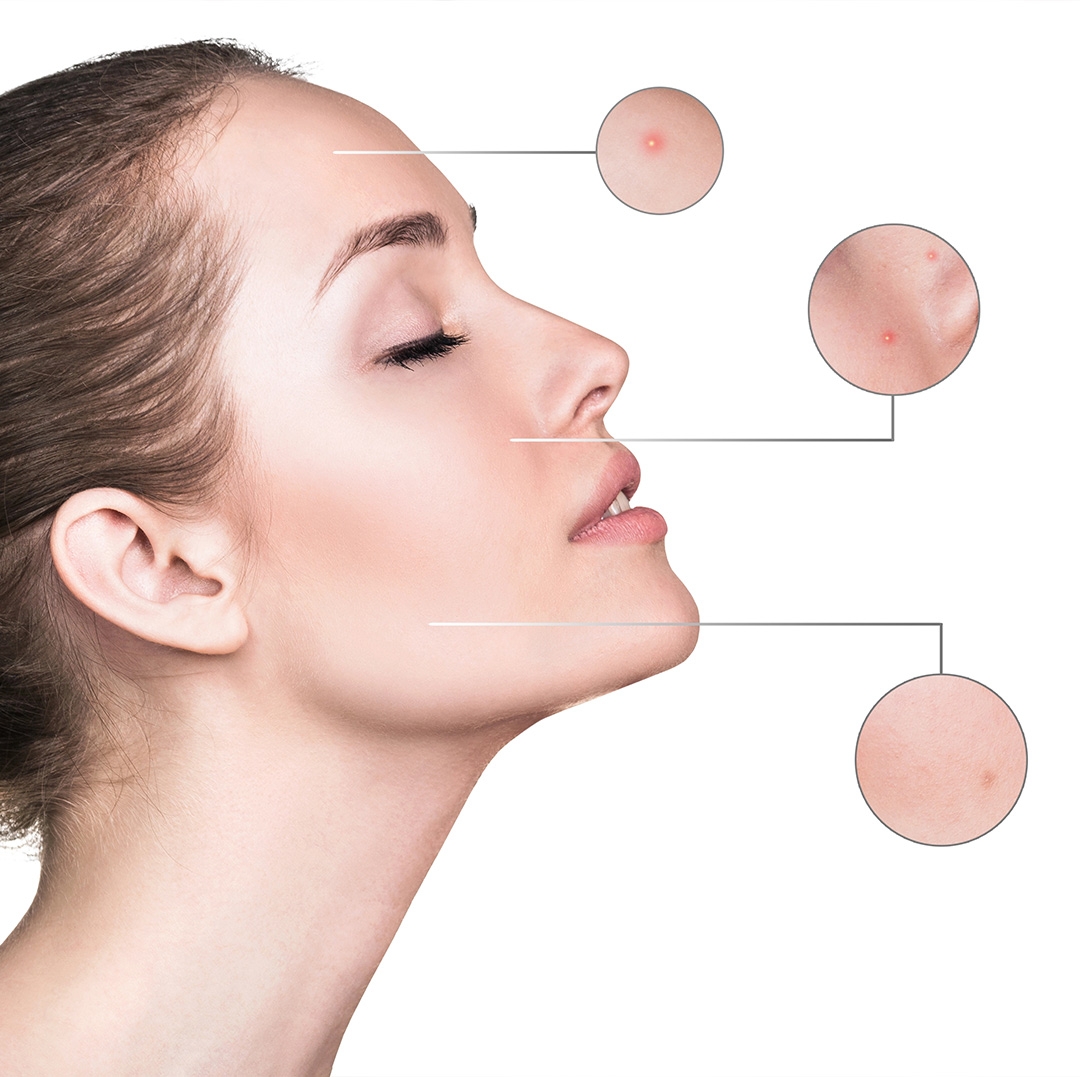
Stress hormones stimulate the sebaceous glands, leading to excess oil production. Pores become clogged, bacteria multiply, and acne flares up—particularly along the jawline and cheeks.
Additionally, stress slows down wound healing, meaning breakouts last longer and heal more slowly.
2. Eczema (Atopic Dermatitis)
Stress disrupts the skin’s protective barrier, allowing irritants to penetrate and moisture to escape. This triggers or worsens eczema flares, characterized by dryness and intense itching.
The “itch–stress–itch” cycle becomes hard to break without both dermatologic and psychological management.
3. Psoriasis Flare-Ups
Psoriasis is a chronic autoimmune skin condition, and stress is one of its strongest triggers. Imbalances in cortisol and inflammatory signals cause skin cells to multiply too quickly, forming thick, scaly plaques.
4. Rosacea (Facial Redness)
Stress can dilate blood vessels and increase facial flushing. In people with rosacea, this leads to visible redness, burning, and sensitivity—especially during emotional stress or anxiety.
5. Dryness, Dullness, and Fatigue
Chronic stress reduces blood flow to the skin and slows cell turnover, leaving your complexion dull and tired. Sleep disruption adds to the problem, leading to dark circles, fine lines, and loss of radiance.
“Stress Face”: Is It Real?
Yes, it’s real—and it’s visible.
Chronic stress raises cortisol levels, which decrease collagen production. The result?
Loss of elasticity and firmness
Early fine lines and wrinkles
Pale, tired, and tense facial expressions
So, while “stress face” may sound like a casual term, it has a real biological foundation. In aesthetic terms, stress can make your skin appear older, rougher, and less vibrant.
How Psychology Affects the Skin
Your emotional and psychological state plays a significant role in your skin’s health. Conditions like anxiety, depression, and chronic fatigue can weaken the skin barrier and reduce its ability to heal.
The scientific field studying this connection is called psychodermatology—the intersection of psychology and dermatology.
Research shows that:
Negative emotions increase inflammation and oxidative stress.
Positive emotions promote cell renewal and repair.
In short, learning to manage stress doesn’t just improve your mood—it visibly improves your skin.
How to Fix Stress-Damaged Skin
The good news is that stress-related skin problems are reversible with a comprehensive approach combining dermatological care, nutrition, and lifestyle changes.
1. Strengthen the Skin Barrier
Use skincare products containing hyaluronic acid, ceramides, and niacinamide. These ingredients enhance hydration and repair stress-induced barrier damage.
2. Eat Antioxidant-Rich Foods
Nutrients such as vitamin C, vitamin E, zinc, and omega-3 fatty acids protect against oxidative stress. Stay hydrated and avoid sugary or processed foods, which can worsen inflammation.
3. Prioritize Sleep and Relaxation
Quality sleep lowers cortisol levels. Aim for 7–8 hours per night.
Practice deep breathing, meditation, or yoga, which help regulate blood flow and skin oxygenation.
4. Seek Dermatologist Support
For conditions like acne, eczema, or rosacea triggered by stress, customized topical or oral treatments may be necessary.
Dermatological consultation ensures both medical and emotional aspects are addressed.
Frequently Asked Questions
1. Why does my skin get worse when I’m stressed?
Stress hormones like cortisol weaken the skin barrier, increase oil production, and slow cell renewal—leading to acne, dryness, and irritation.
2. Can stress really change your face?
Yes. Chronic stress reduces collagen and elastin, causing wrinkles, sagging, and dullness—commonly known as the “stress face.”
3. What skin conditions are caused or worsened by stress?
Eczema, psoriasis, acne, rosacea, and hives are the most common stress-related skin diseases.
4. Does psychology affect skin health?
Absolutely. Emotional stress increases inflammation, while positive mood and relaxation enhance cell regeneration and barrier function.
5. How can I repair my skin after stress?
Use barrier-repairing moisturizers, eat antioxidant-rich foods, get quality sleep, and consult a dermatologist for targeted treatment.

Editör
View All Articles